Donations

Schedule Update – Cancellations:
July 9, Presser 222, 11:30 AM RECITAL: Skybound Souls / M. PIERCE
Welcome to the IDRS 2026 Conference Schedule! Scroll down to browse the wide variety of events, including recitals, workshops, masterclasses, presentations, panel discussions, evening concerts, and more taking place throughout the week. More information continues to be added, so check back regularly as the conference approaches.
Exhibit hours:
July 7: CLOSED
July 8 – July 10: 10:00 AM – 5:00 PM
July 11: 10:00 AM – 1:00 PM
Conference Activities (including Baroque Band, Contraband, Reading Groups, and Double Reed Band) are included in the schedule below. Individual activity schedules can also be found via the Conference Activities page.
Poster Sessions on Display
Poster Sessions: July 7–9, Shriver Center (near the Exhibits)
The 2026 conference will feature the inaugural year of our new Poster Session Competition.
Stop by Shriver Center Living Room July 7th through 9th to enjoy the poster entries and join us for the winners announcement at the reception on the evening of July 9th!
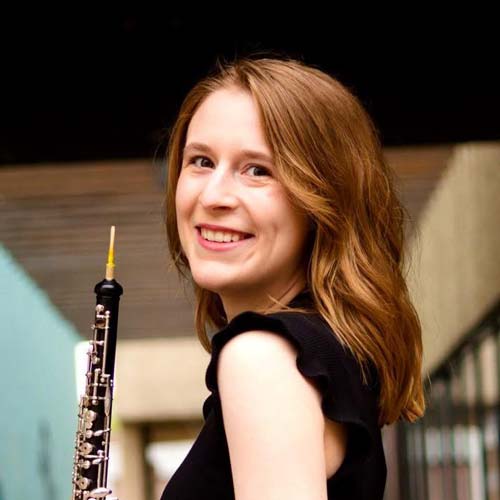
Despite the abundance of online resources for student oboists, a critical gap remains in the pedagogical support provided to non-oboe-playing music educators. This project addresses the systemic barrier, specifically in rural and underserved areas, that prevent band directors from successfully recruiting and retaining oboe students. The purpose of this research is to develop a centralized, open-access digital platform designed to improve the pedagogical efficacy of music educators. This resource includes comprehensive modules on playing fundamentals, purchasing reeds, fundamental exercise sequences for students, and video demonstrations. Additionally, a curated directory of instructors committed to serving under-resourced communities is integrated to facilitate mentorship. By equipping educators with these specialized tools, this project aims to mitigate ‘instrument intimidation’ and foster a larger, more socioeconomically diverse generation of young oboe players.
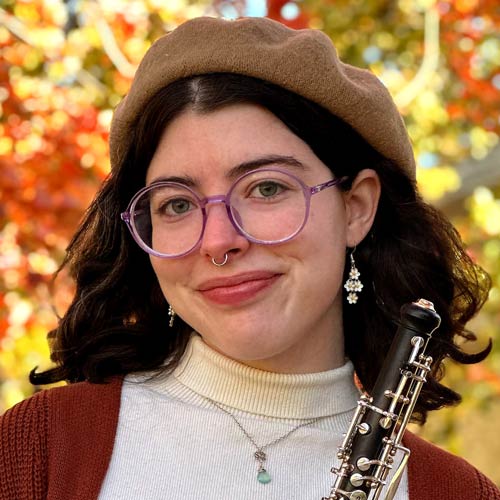
Dr. Chen Yi (b. April 4, 1953) is a prolific Chinese composer and the Lorena Cravens/Millsap/Missouri Distinguished Professor of Composition at the University of Missouri-Kansas City Conservatory of Music. Dr. Chen’s compositional style blends familiar sounds from her home in Southern China with Western classical music, creating new soundscapes for ensembles of all sizes. “Mountain Song” for solo oboe premiered in 2022 at the bicentennial of London’s Royal Academy of Music. It was inspired by Chinese folk songs and the dramatic beauty of nature. Chen Yi evokes memories from her time working in the rice fields and mountains of China, where she would listen to the workers sing a multitude of folk songs. Mountain Song is a reminiscent imitation of farmers singing improvisational melodies. The piece does not quote any particular folk song; instead, it is an original melody that resembles an impromptu tune sung by a single person. “Elegy” was written in 2020 as a response to the Covid-19 pandemic and was part of the Saint Paul Chamber Orchestra’s series of solo commissions. Chen Yi dedicated this solo to oboist Cassie Pilgrim, who shares her southern Chinese heritage. Pilgrim and Chen were introduced during this collaboration with the Saint Paul Chamber Orchestra, where Pilgrim currently serves as principal oboe, a position she has had since 2019. Pilgrim’s late mother was from Chen’s home city of Guangzhou, so the composer decided to both commemorate Pilgrim’s mother and honor those who were lost in the pandemic. Chen Yi’s compositional style in “Elegy” utilizes the mournful Yifan mode (乙反調式) by using quarter tones and pitch bends. Yifan refers to the emphasized tritone scale degrees in the mode; Yi corresponds to Western solfège ti and fan corresponds to fa. The downward pitch bends provide the sorrowful color, evoking a sighing sound.
Chinese composer Chen Yi’s culture influences many aspects of her compositions, drawing from Cantonese folk songs, modes, and lyrical styles. This is evident in her oboe works “Mountain Song” and “Elegy,” as they are predominantly inspired by folk music that was popular in her hometown of Guangzhou. The timbre of the oboe is perfect for replicating the human voice and the many ranges of emotions and inflections found in vocal music. By writing “freely” in her compositions, Chen Yi informs the player to treat each note as if it were improvised, allowing for rhythm and tempo to be up to the player’s interpretation. Both “Mountain Song” and “Elegy” have been transcribed for solo bassoon by Chen Yi and are available for purchase on Theodore Presser. Expanding the double reed repertoire to be more inclusive of non-Western cultures and women composers is essential for understanding the identities of underrepresented people.
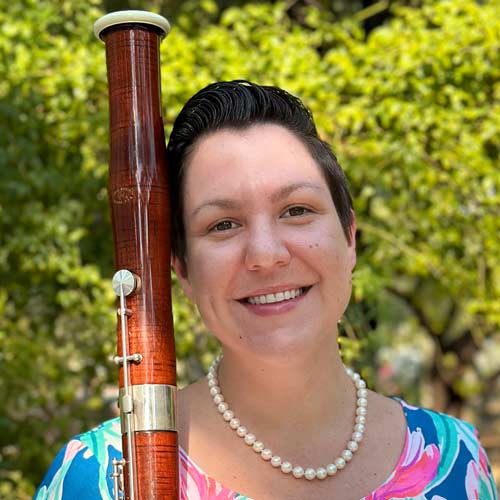
“Where in the world are the women bassoonists?!”
Join bassoonist Liz Valvano on a world tour, identifying prominent women bassoonists performing and teaching across the globe. This poster will feature musicians who identify as women who also play the bassoon or the contrabassoon.
This poster is part of an ongoing research project by Dr. Valvano, who is deeply interested in seeing our global connections in music.
Background and Problem: Reed cane selection for double reeds has long relied on subjective visual and tactile assessment. Standardized objective tools for quantifying the pre-processing quality of Arundo Donax L., the primary plant material for reeds, remain limited. This project adapts nondestructive evaluation (NDE) techniques from materials science to establish a repeatable framework for identifying and quantifying the physical properties that determine reed performance and reliability.
Methods: Pulse-echo ultrasonic testing was applied to measure the time-of-flight of acoustic waves through gouged oboe and bassoon cane, deriving stiffness (Young’s modulus), resiliency (acoustic impedance), and apparent density. N = 239 cane samples were analyzed under controlled conditions, followed by blind performance evaluations by N = 15 double reed musicians across skill levels. Data informed the creation of a Material-Performance Table, mapping property ranges to desirable acoustic and mechanical behaviors.
Results: The study produced a composite metric integrating stiffness, density, and resiliency. Cane within ±20% of the mean consistently yielded reeds of high quality, while deviations beyond ±40% correlated with poor or unstable performance.
Conclusion: This research bridges materials engineering and musical performance, demonstrating that reed success can be predicted through quantifiable data. The approach introduces a low-cost, evidence-based method for improving consistency and quality control in reed making. Overall, the project redefines reed making as both an art and a science, grounded in data-driven understanding of sound, structure, and performance.
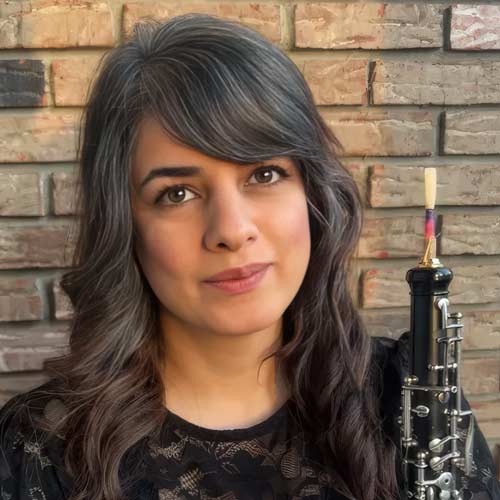
“The Other Side of Oboe Sound” Poster Presentation
This poster presentation will cover many extended techniques available to oboe players and composers. The content is divided into three categories:
Overview: including distinctions between “standard” techniques and “extended” techniques with a brief historical survey, tracing early examples of extended techniques in works by composers such as Hector Berlioz and Richard Strauss, and continuing through the twentieth century with composers including Luciano Berio, Krzysztof Penderecki, and Heinz Holliger whose contributions significantly expanded the technical and sonic possibilities of the instrument.
Technical Details: including QR codes which will link to video examples of specific techniques, performed by the presenter.
“Real-Life” Examples: including QR code links to oboe repertoire that includes these techniques (some of which are discussed in the overview) and thoughts about composer/performer collaboration.
This presentation emphasizes the importance of performer–composer collaboration and encourages oboists to adopt a flexible, creative, and exploratory approach to expanding the sonic identity of the instrument.I am looking forward to being at the conference to answer questions and provide more details about this topic.
July 9th Daytime Events
New Works for Contrabassoon
Kyle Sodman (contrabassoon)
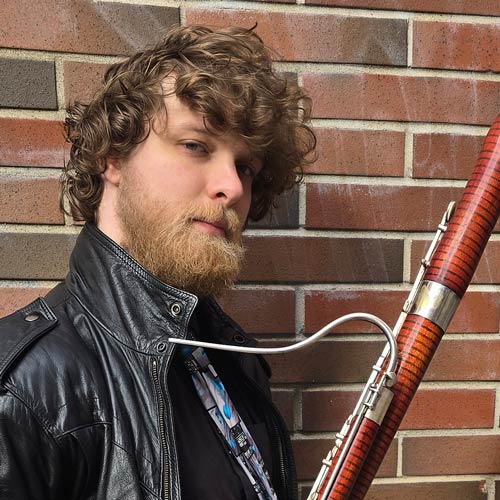
A contrabassoon recital featuring new works commissioned by Kyle Sodman.
Playing Bach with Style: cello suites 1-3 on the bassoon
Wouter Verschuren (bassoon)

This masterclass explores Bach’s Cello Suites BWV 1007–1009 from a bassoonist’s perspective, based on a new edition prepared by bassoonist Wouter Verschuren. Using a historically informed approach, the session focuses on style, dance character, rhetoric, and the adaptation of Bach’s single-line writing to a wind instrument. Particular attention is given to articulation, the use of slurs, breathing and phrasing, the shaping of long lines, and practical solutions for suggesting harmony and double stops, enabling these works to speak convincingly and idiomatically on the bassoon.
Norma Hooks Young Artist International Competition for Oboe
Divergent Keys, Shared Music: A Discussion with Neurodivergent and Disabled Musicians
Kelsey Maes, Susan Miranda, Ann Fronckowiak, Sarah Hurd, Lauren Fox

What does it mean to make music in a world not designed for every kind of mind or body? For many disabled and neurodivergent musicians, this question defines daily reality. As this awareness grows, conversations about accessibility, equity, and belonging have become more vital than ever.
This panel unites neurodivergent and disabled musicians in a fishbowl format, in which shared social identities are explored through facilitated conversation. Co-facilitated by Drs. Kelsey Maes and Susan Miranda, this conversation will explore barriers in education, performance, and professional life, while also celebrating the innovation, adaptability, and artistry that emerge from them.
Panelists will share actionable ideas for musicians at all levels seeking to create more accessible and supportive environments for all, regardless of neurotype or ability. We invite the double reed community to reimagine what true inclusion looks like and to foster dialogue benefiting current and future generations of performers.
The Neoclassical Legacy of Nadia Boulanger
Wesley Boehm (oboe)
In the early-to-mid twentieth century, neoclassicism became a widely used compositional technique by composers throughout the world. This style was largely perpetuated through the teachings of Nadia Boulanger. Polish composer, Grazyna Bacewicz studied with Boulanger in Paris before returning to Poland to help create and solidify a national Polish style of composition. Similarly, Canadian composer, Jean Coulthard studied with Boulanger before returning to Canada and becoming one of the most well-known Canadian composers during her lifetime. Both composers use elements of neoclassicism such as balanced forms, tonalities, and clear texture, incorporating them into their own musical languages. These two works, separated by only eight years, exemplify the versatility of neoclassicism in the twentieth century, connecting two composers with very unique compositional voices through a common thread from opposite ends of the Atlantic.
Orchestral Excerpts for Bassoon
Quincey Trojanowski (bassoon)
Two or three students will be asked to play two or three contrasting orchestral excerpts. This will be followed by a brief question and answer session.
A Retrospective Look at My Education with Undiagnosed Autism Spectrum Disorder
Martin Van Klompenberg
After being diagnosed with high-functioning autism at age 35, I began reflecting on my past education and how it was possibly impacted, impeded or improved based on my autism. I wondered what my education could have been if I was aware of how my brain processes information differently from my teachers and fellow students. It is my hope that this presentation will encourage educators to identify new strategies to support neurodivergent students.
This presentation will include anecdotal reflections of my education, supplemented by academic research, strategies to overcome potential obstacles, and opportunities to show the strengths of neurodiverse students.
Bassoon & Piano Works by Living Female Ukrainian Composers
Zachary Senick (bassoon)
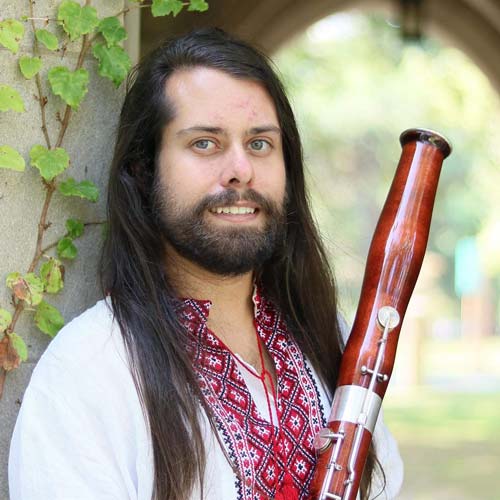
Ukrainian composers historically, especially female have been underrepresented in classical music due to the oppression and censorship throughout history. This has resulted in Ukrainian composers being unable to be performed outside of their native organizations. My recital aims to introduce the world to a variety of styles currently flourishing in Ukraine by 4 different female Ukrainian composers from neoclassical, folklorism, and avant-garde. All of the works being performed are getting published in the spring 2026 by Éditions Plamondon as part of their Slava Ukraini Series. This recital will also feature two world premieres of newly composed pieces dedicated to me by Olena Arkhypova (living in Dnipro) and Nadya Poklad (recently moved to Canada from occupied Luhansk). Therefore, this recital is a gateway to introduce these new and hardly performed Ukrainian works to hopefully create more interest in Ukrainian music worldwide.
Aging: Stuff Happens part 2
Brenda Schuman-Post, Leonard Hindell, Terry Ewell, Edwin Lacy, Lisa Alexander, Maya Stone, Valerie DiCarlo, Michael DiPietro

In Part 2, continued from IDRS 2025, we’ll elaborate, offering increased investigation into sources of healing that might go beyond the typical or expected. Have you tried sound healing like frequency medicine or humming? Color therapy? Acupuncture? Laughter yoga? Hypnosis? AI as a mentor for health, performance, and practice regimen? Share your findings but no storytelling. This is a round table sharing of information that also includes traditional medicine. What insights and suggestions can you offer to enlighten and serve the double reed community? What have you learned that you can pass on to others about the surprises that affect our playing and careers as we age? Subjects can include hearing loss, hearing aids, vision, arthritis, modifying key work, teeth, hands, feet, fitness, wear and tear, body image, injuries, illness, pain, mobility, memory issues, endurance, loss of interest, retirement, relevance and more. The members of the Aging: Stuff Happens Part 2 panel are all actively working, teaching, playing, performing musicians who range in age from 47-88.
Five For The Fifth: Beethoven’s C minor Symphony for Bassoon Quintet
Matthew Harvell (bassoon), Dominik Schulz (bassoon), Lynn Hileman (bassoon), Casey Gsell (bassoon), Andrew Genemans (bassoon)

Performing Oboe Excerpts from the Cantatas of J. S. Bach: Historical Context, Spiritual Considerations, and the Human Voice.
Benjamin Newman
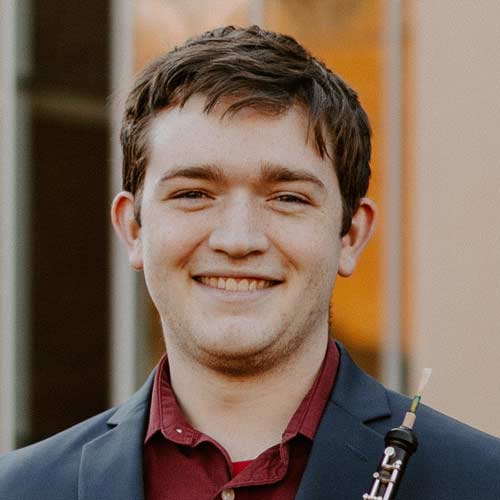
This presentation seeks to share my research into the Baroque Oboe Family and how Bach employed these instruments in his vocal works (primarily cantatas, but also passions, oratorios, etc.). I will present analysis on the relation of oboe obbligato to the text, key signature (and relationship to the Doctrine of Affections), and other relevant musical topics. The presentation will also compare and contrast the oboe with the oboe da caccia and oboe d’amore, as well as compare the oboe family with the other upper woodwinds used in Bach obbligato.
The presentation will also include brief performances of some standard audition excerpts from Bach cantatas with focus on relation to text and expression of affective elements.
J. M. Damase – Early Chamber works for Oboe
Jacob Hutchinson (oboe), Noah Pool (flute)
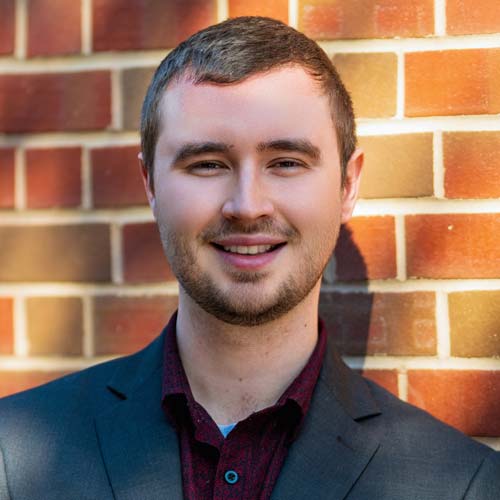

Jean-Michel Damase wrote prolifically for the oboe in the 20th century, employing his unique compositional style in several solo and chamber works. However, overshadowed by his Paris Conservatory contemporaries, his works are rarely performed today, leaving listeners with few opportunities to hear them. The selected pieces showcase his works’ musical and pedagogical value for the oboe community. His Rhapsodie pour Hautbois et Piano displays unique challenges for the soloist, requiring extreme technical and timbral control for an effective performance. His Trio pour flute, hautbois et piano, performed by E/221, includes similar challenges, while also adding the distinctive flute timbre, allowing players to explore Damase’s compositional language in a chamber setting. Through this recital, we hope to inspire audience members to explore the works of Damase, to appreciate his distinctive soundscapes, and acknowledge the pedagogical value in his oboe music.
IDRS Contraband Rehearsal #1
The Rule of Threes – Achieving Success as a Freelance Musician
Pamela Ajango
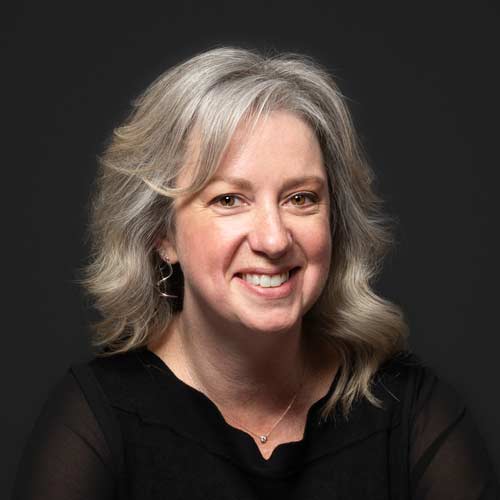
The “Rule of Threes” is a principle used in writing, advertising, art – to name just a few. Look up almost any area of study or interest, and you’ll find something about this rule. Simply (and for this presentation’s purpose), it is about making a memorable list. “The Rule of Threes – Achieving Success as a Freelance Musician” will present ideas in three categories I believe are important to contemplate as a freelance musician: personal, professional, and musical. Within each of these three categories will be three more specific ideas to consider. I will also share some observations regarding career paths in music, and conclude with a Q&A/discussion about my presentation. I hope this hour will be useful to current and future freelance double reeders.
Suite for Electric Bassoon
Jack Fanning (bassoon)
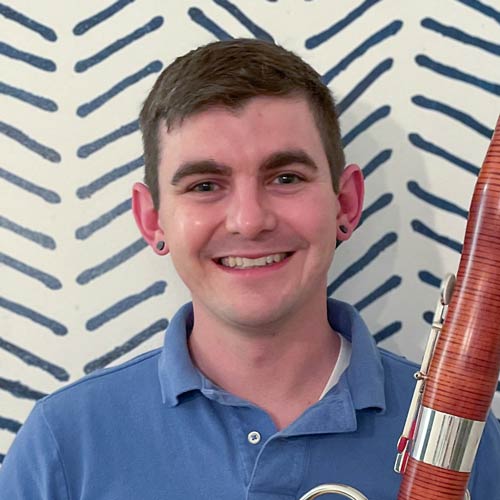
A recital featuring a world premiere of my own original work for electric bassoon. This funk-inspired, multi-movement work for bassoon and live effects incorporates distortion, delay, looper, and octave effects. The piece is accessible to play, and requires minimal equipment. The music is reminiscent of minimalist composers Steve Reich and Philip Glass, and modern artists Trent Reznor and The Mars Volta.
Fix It in Five: Rapid Fire Daily Techniques for Quick Oboe Improvement
Andrew W. Parker
This workshop offers students practical, high-impact tools they can implement in just five minutes a day to address common challenges in oboe playing. Rather than full lessons, each participant will present a short excerpt or specific issue—such as articulation clarity, vibrato control, tone color, dynamic pacing, or breath management. Dr. Parker will then guide them through a focused, five-minute routine designed to target that exact problem efficiently and effectively. These bite-sized strategies emphasize diagnostic awareness, mindful repetition, and small, consistent habits that produce meaningful results. Attendees will leave with a collection of mini-exercises and practice frameworks they can immediately incorporate into their own playing. “Fix It in Five” is fast-paced, engaging, and designed to empower oboists with simple, sustainable tools that lead to noticeable improvement in a short amount of time.
Increasing Resonance and Responsiveness in Woodwind Reeds
Mark Eubanks

- Introducing Tap Tone Tuning to achieve structural balance
- How to easily identify common failure factors in reed making and taking steps to avoid them
- Making simple modifications to the reed that allow improved control of resonance within pianissimo playing
- Maintaining pitch flexibility while maintaining resonance
- These new methods have been in development over the last 10 years and expand the reed tuning methods covered in my previous publications
Life, Loss, and Love
ToniMarie Marchioni (oboe), Jacob Coleman (piano)

This recital explores the concepts of life, loss, love, and memory, through the works of three musically diverse composers. Written in memory of oboist Charles Hamann’s mother, “For life, for love”, by the Canadian composer Christian Ellenwood, is a beautiful and heartfelt musical meditation on a mother’s or mother figure’s gift of life and love. Marina Dranishnikova’s Poem, allegedly inspired by heartbreak, is a a deeply expressive and poignant reflection on grief that follows a loss. The concluding work, Antonio Pasculli’s lesser performed “Ricordo di Napoli (Memory of Naples)”, offers a contrasting musical experience, showcasing the operatic and virtuosic side of the oboe while allowing us to reflect joyfully on our own heritage and memories of travels abroad or times gone by.
New Products for the Bassoon!
Susan Maxwell
Three new products for the Bassoonists! Let’s make life a little easier!
This will be a demonstration as well as interactive session with the Maxwell Bassoon Profier, Maxwell Leg Hook, High Note Studies and Bassoon Buddy (fingering tool). Participants will be able to hear about why these products were created, and how they can help with common bassoon issues. Then they will have the opportunity to try them out!
Reading Session for BIPOC Workshop
IDRS Committee for Diversity, Equity, Inclusion, and Belonging
Hosted by the committee for Diversity, Equity, Inclusion, and Belonging, this gathering invites community members who are Black, Indigenous, and People of Color to connect. Formerly an affinity mixer, the event is now a reading session where attendees who identify as part of this group may come together to play in a supportive, collaborative environment. Repertoire is open.
“The Sorcery of Mysterious Light” Music for Bassoon and Piano by Griebling-Haigh and McClure
Darrel Hale (bassoon), Brianna Matzke (piano)


Congratulations, you have a university job interview! Advice on how to ace the interview and impress your search committee.
Tracy Carr
Obtaining a full-time university music position is both a goal and dream for many. Having the opportunity to share daily your love of both music and education with like-minded colleagues and students is an ideal profession and vocation.
With the number of applicants outweighing the number of available university positions, being offered an interview is not a guarantee of a job offer. This presentation will share advice on how to present your best self in an academic job interview.
Whether you are a recent graduate seeking your first university position, an adjunct or visiting professor applying for a new position, or any academician committed to honing one’s interview skills, knowing what to say and what not to say to the search committee in your initial interview and at your on campus interview can greatly increase your odds of obtaining the position you desire.
Mosaicos: Movements Alone or Pieced Together (for oboe or English horn & piano)
Lindsay Flowers (oboe/English horn), Garret Ross (piano)

IDRS General Meeting
Brahms in Professional Oboe Auditions
Peter Cooper (oboe)
This class will cover the two most frequently asked Brahms works in professional oboe auditions: the First Symphony and the Violin Concerto. Participants will explore how to practice these excerpts and how to convincingly present them so players can distinguish themselves at a professional audition. Players will also touch upon ways to express the emotional impact of these solos in such a way to touch the listeners. With so many fine oboists in every audition, it is essential for students to learn ways to “emerge from the pack” to be contenders in the difficult audition world. Two players will perform, each covering one of these works.
Optimized At-Home Quick Sorting of Reed Cane for Musical Instruments
Cullen Blain
This session introduces a science-based framework for evaluating and sorting Arundo Donax reed cane using accessible nondestructive methods established as part of Cullen Blain’s D.M.A. research, entitled ‘Nondestructive Evaluation of Reed Cane: A New Approach in Determining the Material Properties of Arundo Donax L.’ (University of Cincinnati, 2019). The session demonstrates how principles of ultrasonic non-destructive testing, acoustical science, density measurement, and statistical modeling can be adapted into practical, low-cost at-home techniques for reed makers and manufacturers. Participants will explore the relationships between cane stiffness, density, and resiliency—factors that influence tone, response, and reed longevity—and learn how to calculate a simplified “Viability Index” to predict reed performance before gouging or profiling. By blending materials engineering and artistry, this workshop equips reed makers, manufacturers, as well as educators and performers with tools to optimize their own “quicksort” process for consistent, high-quality reeds while reducing waste and improving reliability in reed-making outcomes.
Remembrance and Prayer
Frank Morelli (bassoon), Liliya Ugay (piano)
Having played the bassoon for 60 years, I’ve chosen these works to offer a special message, and as a result I’ve titled the recital “Remembrance and Prayer.” The first and last works presented today were written for me. Souvenirs was written in 2025 by Liliya Ugay, who immigrated from Uzbekistan and teaches composition at FSU in Tallahassee, FL. She and I had met while she was a DMA student in composition in the Yale School of Music. Prayer was written by Sri Lankan-born Nirmali Fenn, who grew up in Australia after being adopted into a family there. We met as faculty colleagues at SUNY Stony Brook where she also teaches composition.
Dr. Ugay wrote Souvenirs as a result of a conversation we had about my sense of fulfillment after a lifetime in music. Dr. Fenn wrote Prayer in 2022 for me in reaction to a succession of world crises. It is a prayer for peace. The bassoonist is required to imitate the style of the duduk with jaw vibrato and occasional pitch bends. In addition to harmonics, various alternate fingerings are employed to create a spectrum of tone qualities on a given pitch. At the end of the work, the pianist places a prayer bowl in the piano to create additional evocative effects. In between, we will offer lieder from Schumann’s Dichterliebe. Thus, I hope to share my gratitude for a life in music, my dedication to singing on our beloved bassoon, and finally, a prayer for peace.
Dialogues: New Works for Oboe and Bassoon
Stuart Breczinski (oboe), Nanci Belmont (bassoon)
Our program for IDRS 2026 illustrates a wide spectrum of possibilities for the oboe and bassoon as both individual instruments and as a duo. Inspired by nature, solitude, and union, these pieces take the listener on a journey from darkness to light. The program begins with Lera Auerbach’s Air ‘I Walk Unseen’ for bassoon and piano. A musical depiction of contemplation and solitude, the work borrows its name from John Milton’s poem “Il Penseroso.” Stephen Beck’s Cape Town Starlet takes its inspiration from a Red-Winged Starling that serenaded the composer on a trip to South Africa. The performer interacts with recordings of the bird throughout the work, and live electronics blur and transform the sounds of the two partners. We close the program with a new piece by composer Mara Gibson, which celebrates the union of two voices becoming one through the exploration of unique timbres for oboe and bassoon.
Externalize the Thinking
Brigit Pacher
This is an open repertoire workshop that welcomes bassoonists of any experience. In adherence to traditional class goals, the clinician will work with the performers to expand their perspective of the music, facilitate execution, and further the artist’s expression. Unique to this workshop, the clinician will choose moments to “externalize the thinking” and briefly verbalize specific pedagogical decisions being made to optimize the learning for the performer and audience. This is meant to provide insight into the clinician’s perspective during these classes, while retaining a focus on the educational experience for the performers.
IDRS Double Reed Band Rehearsal #2
Subdividing Reimagined as a Mental Health Panacea
Jacqueline Leclair
This presentation proposes rhythmic self-entrainment (RSE) – commonly referred to as “subdividing” – as a possible solution for the types of malaise many post-secondary music students experience during daily music practice: frustration, mindlessness, excessive stress, and anxiety. While RSE is traditionally taught to help students improve musically, this presentation shows how it could also be implemented as an effective method for improving mental health. Considering the context of rising mental health crises that affect post-secondary students worldwide, improvements in music student mental health are urgently needed. Necessarily speculative in nature, this article examines RSE through the lenses of various musical, psychological, and philosophical disciplines, and explains how RSE offers the potential to profoundly improve music student mental health.
Resonances: Oboe Solo and Electroacoustic Works by Mexican Female Composers
Martha Hudson (oboe)

This recital presents contemporary solo and electroacoustic works by leading female Mexican composers whose innovative contributions have significantly expanded the oboe repertoire. By showcasing their distinct artistic voices, the program aims to highlight an underrepresented area of contemporary oboe literature and promote broader recognition of Mexican composers in professional performance settings.
Five Duets (R. Barrantes Aguero), Howarth Trio – Beethoven (G. Hunt) 4 Bassoons Talking (C. Magee)
Rick Barrantes Aguero (bassoon), Glenn Einschlag (bassoon), Gordon Hunt (oboe), Sarah Roper (oboe), Ewan Millar (oboe/English (horn), Curtis Magee (bassoon), Rachael Young (bassoon), Eric Louie (bassoon), William Jobert (bassoon)

The Blue Spruce Duo: Programatic Works for Flute and Bassoon Written and Performed by Queer and Neurodivergent Musicians
The Blue Spruce Duo
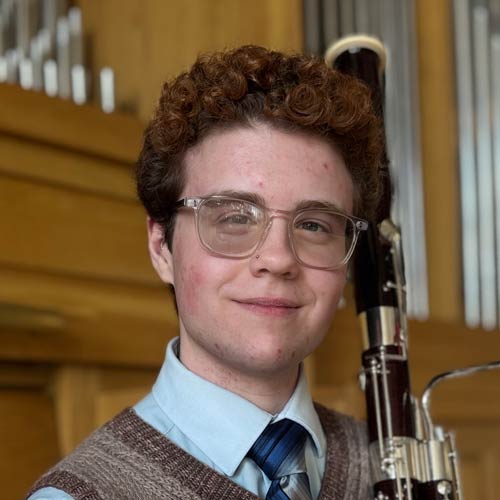
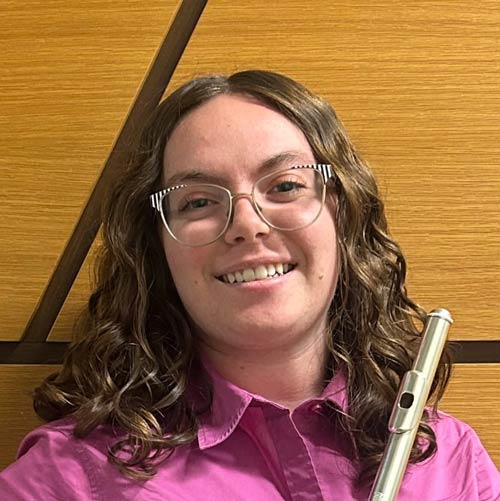
The Blue Spruce Duo is excited to present two world premieres in this recital. These pieces are part of a project to commission (and eventually record) a series of works by openly queer and neurodivergent composers. This project aims to raise greater awareness of the art of queer and neurodivergent composers and provide younger musicians with the opportunity to see themselves reflected in the music they listen to/play.
En Garde! A Joust of Two Oboes
Rachel Messing (oboe), M. Isaac Ripple (oboe)
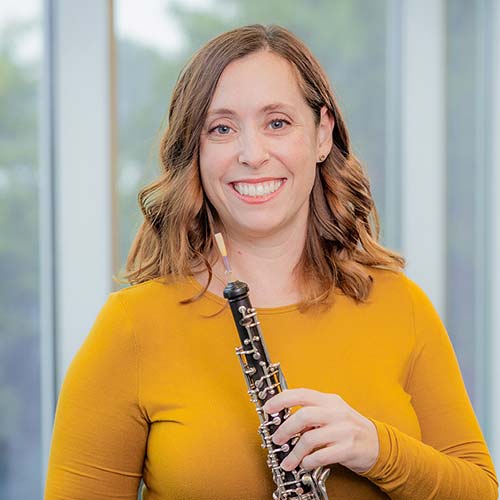
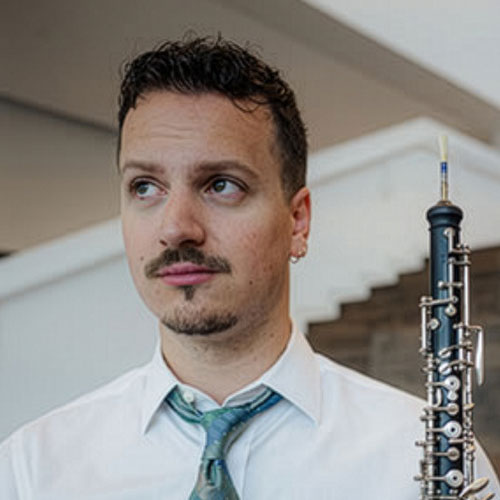
En Garde! presents an exploration of the innovative capabilities and expressive range within duo repertoire for the oboe. These works showcase the interplay between oboe and English horn, highlighting the evolving identity of these instruments beyond the orchestral sphere, and the dialogue which composers of varying backgrounds explore in their additions to the duo canon.
Bassoon Music by Charles Koechlin and Andre Previn
Allison Nicotera (bassoon), Jacob Coleman (piano)

Beyond the Excerpt List: How Orchestral Auditions Are Actually Won
Joseph Grimmer
In this workshop we will discuss orchestral preparation and what to do at and during the audition (travel, lodging, timing, dealing with stress etc…). Volunteers will be encouraged to play during this session.
Creation of an informed performance practice: Understanding the Aesthetics of Japanese Contemporary Music through the Philosophies of Takemitsu, Tōru (武満徹).
Briele Vollmuth
This presentation aims to discuss how to interpret Japanese and Western contemporary music through the lens of composer Takemitsu Tōru’s philosophies on Japanese music aesthetics. This presentation is an abbreviated version of my DMA research on Japanese music aesthetics. This research covers a method of interpretation of Japanese and Western contemporary music through the examination of oboe works by Takemitsu Tōru, Ichiyanagi Toshi, Hosokawa Toshio, and Nishimura Akira. This presentation will cover topics on Japanese Hōgaku and its representation in modern Japanese music, Composer Takemitsu Tōru’s philosophy of “ma” and “sawari,” and how it relates to the Japanese music aesthetic, and finally, how we as Western musicians can use this information to create a more informed interpretation of Japanese contemporary music, and its application to Western contemporary music.
but they make our lives whole (G. Vang), Title Forthcoming, (S. Miranda)
Ger Vang (oboe), Angela Moretti (bassoon), Amrutha Koteeswaran (flute), Susan Miranda (oboe)
20th-Century Oboe Repertoire by Czech Women Composers
Sydney Schaff (oboe)
A recital of repertoire for oboe and piano composed by Czech women composers. The program will consist of two works: Pastviny (Meadows) by Jitka Snížková and Sonata pro hoboj a klavir by Olga Jírková. This program showcases the Czech musical culture in the 20th-century and brings to light two underrepresented composers. The Czech musical tradition is rich, with well-known composers like Smetana, Dvořák, and Martinů writing national music and representing Czech culture on a world stage. Czech music is characterized with folk elements, nationalistic elements, and invoking imagery of the Czech countryside. At the turn of the 20th-century there were many Czech composers who continued to build on this musical tradition who have been overlooked. Through this program I hope to create a broader understanding of the Czech cultural and musical landscape and give a voice to these underrepresented composers.
Lieder eines fahrenden Gesellen (E. Foltz), Steinmetz Sonata (R. Romine)
Emily Foltz (oboe), Ryan Romine (bassoon)
July 9th Evening Events
IDRS 2026 Banquet Reception
Time: 5:30 – 7:30 PM
Location: Armstrong Student Center Pavillion
Join us for a celebratory reception to enjoy each other’s company and connect as an IDRS community. The event will feature music from the Baroque Band and student ensembles, as well as the announcement of our 2026 Honorary Member inductees and the prize winners of our Poster Session Competition. Entry is complimentary with your conference registration. Light hors d’oeuvres, desserts, and beverages will be served. Alcoholic beverages available for purchase.